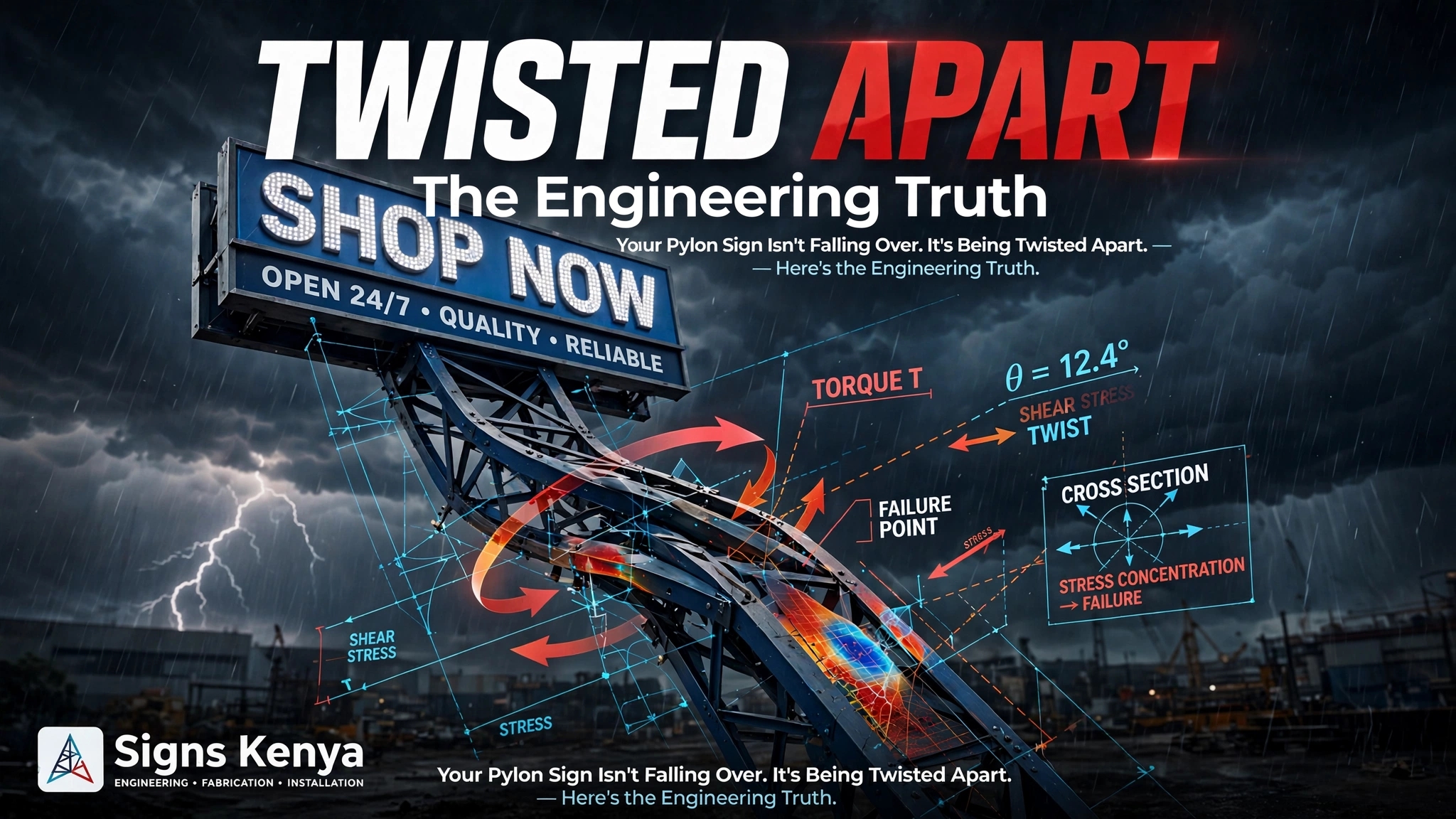
Drive down Mombasa Road, or cruise past the industrial hubs along Uhuru Highway, and you’ll see them: 8-meter, 10-meter, even 12-meter pylon signs towering over the traffic. Some stand perfectly straight. Others lean just a few degrees off true—barely noticeable unless you’re looking for it.
And then there are the ones with cracked concrete bases. Or the ones that simply… tilt.
Most business owners assume it’s a shoddy installation. Maybe the crew didn’t level the ground properly. Maybe the concrete was too thin.
But the truth is much more alarming, and it happens long before the sign ever goes up. It’s physics—math that most standard fabrication shops in Nairobi don’t bother to do. And that neglect is costing people millions in write-offs.
1. The Static Lie We All Believe
Standard sign fabricators treat a pylon sign like a heavy piece of furniture. Weld a steel frame. Pour a slab of concrete. Bolt the structure down. End of story.
These shops calculate one thing: the dead weight—how heavy the steel and aluminum are. They ask, “Does the foundation hold the weight?” If the answer is yes, they install it and walk away.
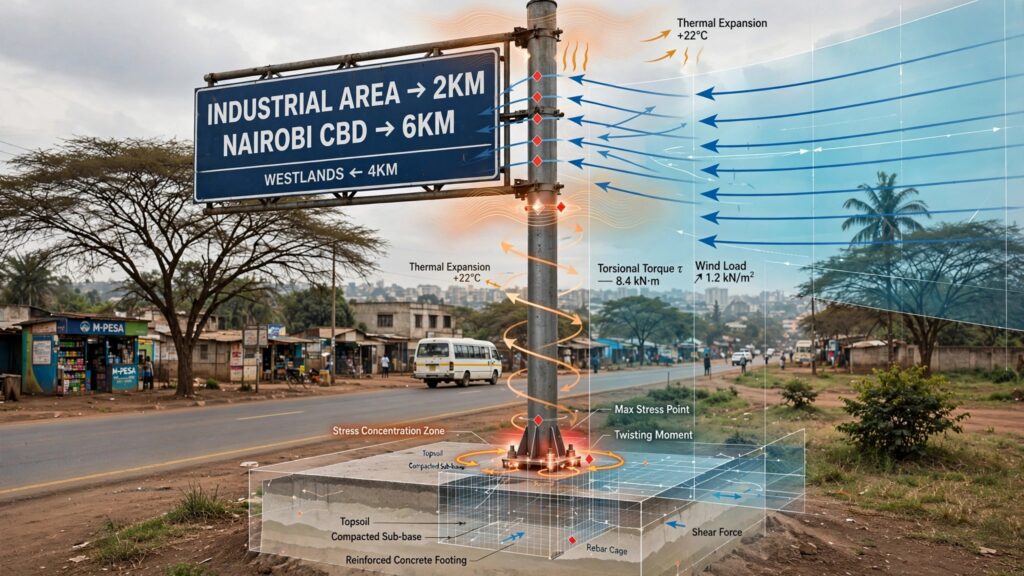
The problem? A 12-meter pylon doesn’t just sit there. The moment a gust of wind hits it, it stops being a piece of metal and starts acting like a massive sail. Wind does not push evenly. It batters, twists, and pulls in ways a static calculator simply can’t predict. Ignoring these dynamic loads is the fastest way to turn a 2-million-shilling investment into a leaning tower of scrap metal.
2. Why Nairobi’s Winds Are a Silent Killer for Signage
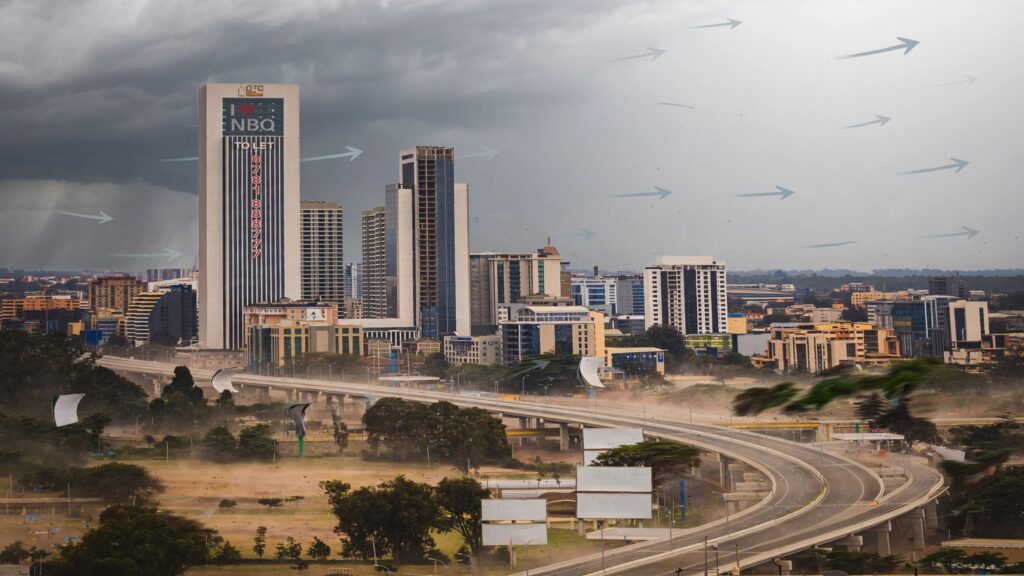
We live in a region where the weather doesn’t politely ask permission. During the heavy rainy seasons, we get unpredictable, high-velocity gusts that sweep across the Athi Plains and funnel straight into the city’s urban corridors.
When a fast-moving wall of air hits a flat-faced pylon, a phenomenon called a pressure differential occurs. The wind slams into the face, spills over the edges, and creates a low-pressure vacuum on the back side. That vacuum creates a suction force that drags the sign outward.
Now, take a sudden squall coming from a slightly different angle—say, 15 degrees off the perpendicular. The wind doesn’t just push the sign over; it twists it.
3. Torsional Fatigue: The Invisible Twisting Force
This twisting force is called torsional shear, and it is the most under-discussed cause of sign failure in the industry.
Imagine holding a thick metal rod. Now, take the bottom half and twist it in one direction, while twisting the top half in the opposite direction. That torque is exactly what happens to the internal steel casing of your pylon every time the wind shifts direction.
Over the course of 18 months, that subtle back-and-forth twisting causes microscopic fractures in the aluminum extrusions and stress fatigue in the arc welds. This is known as harmonic oscillation—when the resonant frequency of the sign structure matches the natural pulse of the wind.
When that happens, the sign doesn’t shake violently during a storm. It wobbles. Slowly. Metronomically. That wobble creates hairline cracks that spiderweb through the base. It isn’t a dramatic, explosive snap like you see in the movies. It’s a slow, silent death happening at the molecular level. By the time you notice the lean, the steel is already compromised.
4. What We Actually Do (Before We Pour a Single Drop of Concrete)
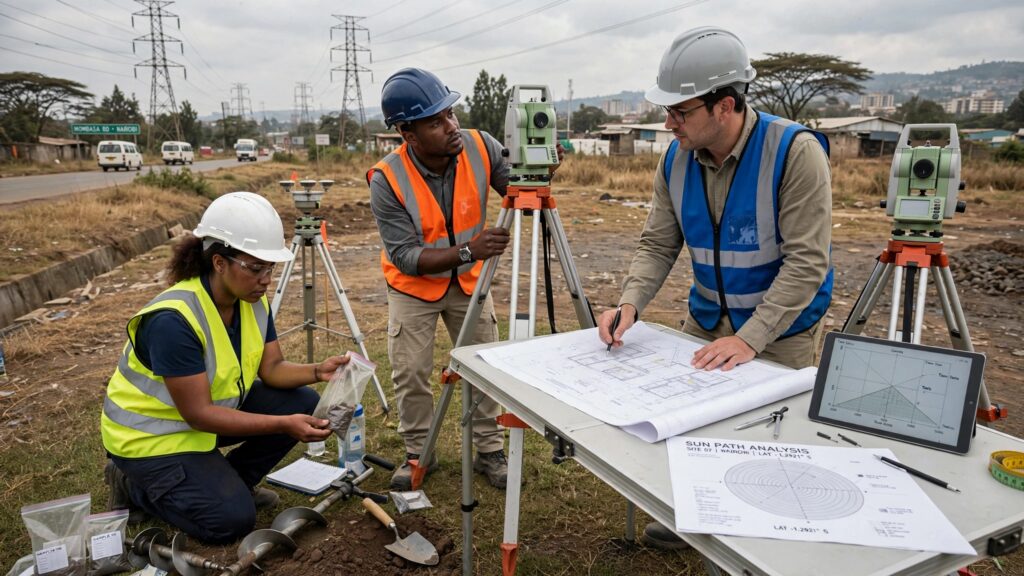
We, at Custom Signs & Graphics, don’t treat pylon fabrication like a job—we treat it like aerospace engineering. When a pylon request lands on our desk, the design phase starts with Finite Element Analysis (FEA).
We plug our proposed structural design into specialized software that simulates wind speeds up to 160 km/h. We map out the overturning moment—the exact center of gravity of the entire structure, the tension load on every single anchor bolt, and the sheer force required to rip the base out of the ground.
From that data, we don’t just pour a slab. We specify a deep-fill foundation (often 2.5 meters below grade) with a detailed rebar cage that acts as a shock absorber. The rebar isn’t just there for strength—it’s mathematically spaced to dissipate the torsional torque before it reaches the main column.
We also use marine-grade galvanized bolts, not standard commercial threading. Nairobi’s damp soil, combined with high tension, is a perfect chemistry set for electrolytic corrosion. Weak bolts snap. Marine-grade bolts hold.
5. What You’re Actually Paying For
This level of engineering isn’t an upsell, and we refuse to treat it as one. You aren’t paying for the cost of the raw aluminum, or the trucking fee for the concrete.
You are paying for the certainty that your company’s brand identity—the physical embodiment of your logo—will not be lying crushed on the ground three years from now, buried under the weight of a compromised structural failure.
The cheapest pylon sign you can get today will cost you double in liability insurance and lost brand trust when the first storm forces it to yield. We design to outlast the wind, not to survive it. That’s the difference between a fabricator who knows the math, and a guy with a welding torch and a hope.
Next time you see a pylon that looks perfect—straight, solid, unmoved by the season’s worst squall—know that it wasn’t lucky. The math was done. The torsional shear was calculated. The steel was engineered for the fight.